An AI agent submits a purchase without approval. A customer receives incorrect account information. An automated workflow changes records it was only supposed to review.
Someone notices the problem. Now comes a decision the organization should have made before deployment: who has authority to stop it?
An AI incident response plan gives employees a way to report problems, assigns responsibility for containing them, and establishes the conditions for restarting work. Those decisions become especially consequential when AI can take actions across connected business systems.
Why AI incident response belongs on the operating agenda
In research released in October 2026, IBM reported that 80% of surveyed executives said an AI-related incident had reached their board or C-suite during the previous year. Only 40% reported a resulting change to governance policy or frameworks.
The survey covered 3,221 executives at organizations with at least 1,000 employees in eight countries across Europe and the Middle East. These were respondents’ accounts of their organizations’ experiences, rather than a global measure of AI incidents. Still, the findings raise a useful management question: when an incident reaches leadership, does the organization have a process for handling it?
As we explored in AI Governance Is Becoming an Operating Issue, accountability has to extend into everyday work. An executive sponsor and an approved policy provide a starting point. Employees also need to know whom to call, what they can pause, and how essential services will continue.
Give employees a clear reason to report a problem
Employees should be able to raise a concern before they understand its cause. An unexpected output might come from a model error, outdated source material, an integration problem, or a change in permissions. Sorting that out belongs in the investigation.
For planning purposes, treat an AI incident as a suspected or confirmed event involving an AI system that causes harm, exceeds approved operating boundaries, or creates a credible risk requiring intervention. That could include confidential information appearing in an unauthorized response or an agent attempting to change records outside its assigned role.
Keep track of near misses, too. An incorrect recommendation caught before use may reveal a weakness worth correcting before someone relies on the next one.
Start with visibility into the workflow: what the system does, which information it uses, what actions it can take, and who owns it. Our article on AI governance and operational visibility explains why that inventory matters. Responders need it to work out what may be affected.
Assign stop authority before it is needed
Designate one person to coordinate the response and a backup who can take over. The coordinator needs a clear route to the business owner, technical responders, and relevant security, privacy, legal, and communications staff. Smaller organizations may combine roles, but the responsibilities still need to be assigned.
The business owner handles service continuity and operational consequences. Technical responders contain the system and investigate its behavior. Risk specialists assess exposure and applicable obligations, while communications staff coordinate updates.
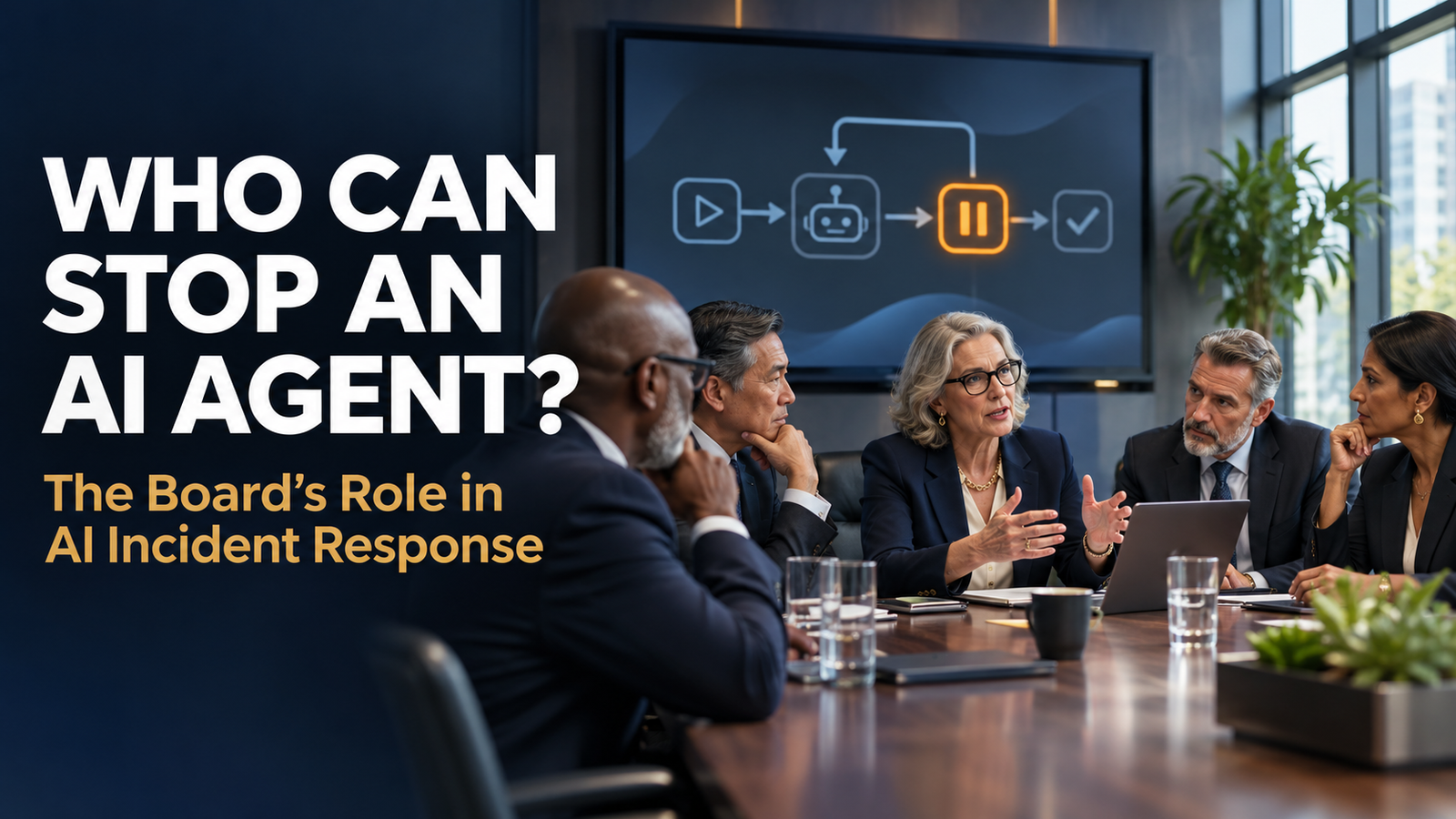
Write down who may pause a workflow without waiting for a committee. Define the scope of that authority so responders understand whether they can disconnect one integration, suspend an agent’s access, or stop a broader service.
NIST’s voluntary AI Risk Management Framework supports assigning responsibility for overriding or deactivating AI systems that operate inconsistently with their intended use. The specific roles should fit the organization’s existing incident process.
Restart deserves its own approval. The person implementing the fix should provide evidence that it works. The accountable owner should decide whether the workflow can resume, involving relevant risk specialists when the potential consequences warrant it.
Match the response to the consequences
A useful starting point is to distinguish limited, significant, and critical events. These are suggested planning categories, not official reporting standards.
A limited event might be an isolated error caught before it affects a customer or changes a record. Assign someone to correct it and check whether it has happened elsewhere.
A significant event could involve repeated errors, affected users, or a workflow that needs to be paused. Activate the response coordinator, contain the affected activity, and brief the executive sponsor.
A critical event could involve serious potential harm, substantial sensitive-data exposure, major service disruption, or unauthorized activity that continues despite intervention. Use the emergency escalation process and involve executive leadership, with board escalation governed by the organization’s established criteria.
Assess the consequences as well as the number of affected transactions. One consequential decision may deserve urgent attention. Uncertainty about the extent of an incident should also influence the response.
Check that stopping the agent stops the work
A stop procedure should explain what happens to work already in progress. Closing an interface may leave connected services or queued actions running, depending on the system’s design.
Document the controls for the application, service accounts, connectors, scheduled tasks, and downstream queues. Then test whether an authorized responder can use them and verify the result. Include the backup responder in that exercise.
Preserve relevant records as circumstances permit, including timestamps, affected transactions, configuration changes, permissions, and execution logs. Protect sensitive information and limit access. Urgent containment should proceed while responders assemble the evidence.
The plan should also identify how essential work continues during the interruption. For purchasing, that might mean a temporary manual approval route. For customer service, it could mean routing affected requests to staff.
What a purchasing failure would require
Consider a hypothetical purchasing agent authorized to prepare orders for human approval. After a configuration change, it starts submitting orders directly to suppliers.
The responder pauses the purchasing workflow and checks whether queued orders can still be submitted. The response coordinator brings in procurement and the technical owner. Technical staff preserve execution records, while procurement compares submitted orders with approval records and identifies which suppliers need to be contacted.
The investigation may uncover a permissions error, an integration defect, or another cause. Until evidence supports an explanation, those remain possibilities.
Even after the technical problem is corrected, procurement still has work to do. Orders may need to be canceled, amended, or reconciled. Restoring the software does not resolve transactions already completed.
Set conditions for recovery
Before restarting, test the fix against the observed failure and check connected systems and outstanding work. Record what is understood about the cause and what remains uncertain.
Depending on the impact, service might resume gradually with human approval required for consequential actions. Name the person approving restart, the monitoring arrangements, and the conditions that would trigger another pause.
Leadership updates should state what happened, what may be affected, what has been contained, and what decision is needed next. Distinguish confirmed facts from estimates and give a time for the next update. Where notification obligations may apply, involve the relevant specialists in assessing the facts and jurisdictions.
After recovery, review the response itself. NIST’s Generative AI Profile recommends practicing incident response plans, conducting after-action assessments, and tracking errors and near misses. Use those reviews to assign specific improvements, such as a tighter permission boundary, a missing log, or a backup who needs access.