
An organization approves an AI tool. Employees begin using it to summarize documents, draft responses, or support decisions. Then something goes wrong: an inaccurate answer reaches a customer, sensitive information enters a prompt, or a workflow changes without anyone updating the procedure. That’s why it’s crucial to consider AI governance roles and responsibilities when integrating these tools into business operations.
Who takes responsibility?
The answer should be clear before the tool enters daily operations. Defining AI governance roles and responsibilities gives employees a practical way to identify who approves a use case, checks its results, manages its risks, and responds when problems arise.
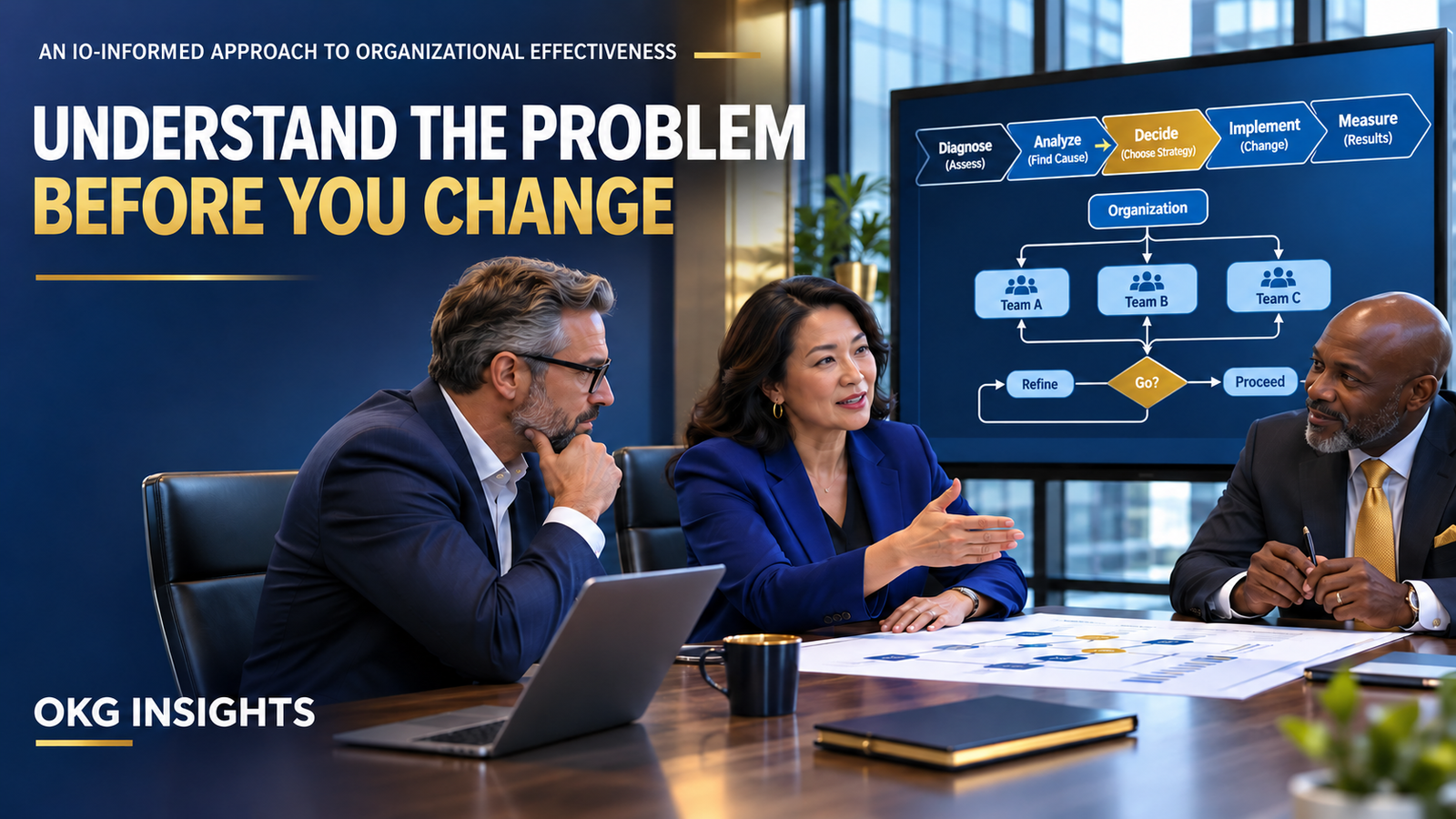
A workable model gives executives accountability for organizational direction and risk decisions, business leaders ownership of individual use cases, and specialist teams authority over controls within their expertise. A RACI matrix helps turn those expectations into specific assignments.
Why AI Ownership Starts With the Business Process
AI enters an organization that already has infrastructure, applications, policies, contracts, records, and established ways of working. Consequently, introducing an AI capability can affect several existing responsibilities at once.
Consider a department using AI to summarize customer complaints. IT may configure the application and connect it to approved systems. Information security evaluates access and exposure. Legal and privacy assess the proposed handling of information. Meanwhile, the business team determines whether the summaries are accurate and useful enough for employees to rely on.
Those contributions serve different purposes. A secure, functioning application can still omit details that matter when resolving a complaint.
For that reason, the business owner needs to remain accountable for the effect on the complaint-handling process. That includes service quality, employee practices, customer impact, and whether the tool produces a measurable improvement.
Clear AI governance roles and responsibilities connect technical implementation to those operational outcomes.
What a RACI Matrix Clarifies
A RACI matrix identifies four types of involvement:
| Role | Meaning |
|---|---|
| Responsible | Performs the work or produces the deliverable. |
| Accountable | Owns the defined outcome or decision and has authority to act. |
| Consulted | Provides input before the work or decision is completed. |
| Informed | Receives relevant updates. |
For the model in this article, assign one accountable role to each activity. Several people may contribute, but the assignment should make clear who ultimately owns that particular decision or result.
Accountability must come with authority. A person cannot meaningfully own a decision if they lack access to the necessary evidence, control over resources, or permission to address a problem.
The NIST AI Risk Management Framework supports documented responsibilities and communication routes. GOVERN 2.1 addresses those assignments, while GOVERN 2.3 places responsibility for AI development and deployment risk decisions with executive leadership. nvlpubs.nist.gov
NIST’s framework is voluntary. It does not prescribe the RACI below or require a particular organizational structure.
AI Governance Roles and Responsibilities in Practice
The following matrix is a starting model to adapt to your organization’s authority structure.
Here, the executive sponsor is the designated leader with relevant decision authority. The business owner owns the affected workflow. The AI lead coordinates governance activities and keeps reviews moving.
Legal and privacy are grouped to keep the example manageable. Organizations with separate functions should distinguish their responsibilities.
| Activity or decision | Executive sponsor | Business owner | AI lead | IT | Security | Legal / privacy |
|---|---|---|---|---|---|---|
| Set AI policy and risk limits | A | C | R | C | C | C |
| Maintain AI inventory and coordinate intake | I | R | A/R | C | C | C |
| Define the use case and success measures | I | A/R | C | C | C | C |
| Approve legal and privacy requirements | I | R | C | C | C | A/R |
| Approve technical integration | I | C | C | A/R | C | C |
| Approve security controls | I | C | C | R | A/R | C |
| Complete business acceptance testing | I | A/R | C | R | C | C |
| Authorize routine launch within delegated limits | I | A | R | C | C | C |
| Decide escalated risk exceptions within authority | A | R | R | C | C | C |
| Monitor business outcomes and user impact | I | A/R | C | R | C | C |
| Coordinate cross-functional incident response | I | R | A/R | R | R | C |
| Authorize retirement and operational transition | I | A | C | R | C | C |
Key: R = Responsible; A = Accountable; C = Consulted; I = Informed; A/R = both accountable and responsible.
The legal/privacy row means approving whether the proposed use satisfies requirements within that function’s remit. It does not give that function ownership of every data or business decision.
Likewise, routine launch approval assumes that required specialist approvals are complete. A “C” in the launch row does not remove the approval authority assigned elsewhere.
Document these prerequisites in the approval process. Risk exceptions also must stay within delegated authority and cannot authorize unlawful activity.
Add procurement, data owners, records management, HR, accessibility specialists, and other functions when the use case requires them. Internal audit may provide independent assurance while preserving its independence from operating the controls it reviews.
Give Every Use Case a Business Owner
An organization may have one AI strategy and many AI use cases. Each use case needs an owner who understands the process being changed and can direct the people performing it.
For a recruiting application, that might be an HR leader. An internal knowledge assistant might belong to the leader responsible for the information service. A public-facing benefits assistant might sit with the executive responsible for delivering that program.
The business owner should define the intended use, prohibited uses, and acceptable performance. They also need to determine how errors are corrected, how affected people raise concerns, and when employees return to a manual process.
For example, a complaint-summary tool might be evaluated for missing facts, inaccurate statements, correction time, and effects on response quality. These measures help establish whether employees can use it effectively.
A statement that the tool “saves time” provides limited guidance unless the organization also understands the work needed to check and correct its outputs.
Distinguish IT Responsibilities From Information Security
Documenting AI governance roles and responsibilities helps teams understand where their decisions intersect.
IT typically manages application configuration, identity integration, technical permissions, connections, service availability, support, and technical changes. Information security evaluates threats and establishes or approves security controls under the organization’s governance model.
Although those teams work closely together, their assignments should be explicit.
Connecting an AI assistant to a document repository, for instance, requires decisions about which documents it can retrieve, whose permissions apply, what activity is logged, and how access can be suspended.
Privacy, legal, data owners, and records specialists may also need to review the proposed use. A working connection establishes technical capability; the full review determines whether the organization should permit that capability in the proposed context.
Define When Consultation Becomes Required Approval
Instructions such as “consult legal” or “involve security” leave employees uncertain unless the organization explains when review occurs and what it produces.
Specify whether each review results in advice, mandatory approval, required remediation, or escalation. Also identify who resolves disagreements and what evidence they need.
Review requirements should reflect the use case’s potential impact. Drafting an internal announcement with an approved tool may follow a standard process. A system influencing employment decisions or access to services warrants a more demanding assessment.
Consider the people affected, the sensitivity of the information, the level of automation, and the consequences of an error.
The NIST Generative AI Profile discusses the potential need for additional human review, documentation, and management oversight. It also addresses third-party dependencies. nvlpubs.nist.gov
A practical implication is to assess the proposed use itself. Approval of a vendor should not automatically authorize every feature, data connection, or application of its products.
Make Human Oversight a Defined Task
A policy stating that “a human must review the output” leaves essential questions unanswered.
Who performs the review? Which source do they check? When does the review happen? What can the reviewer do if something is wrong?
For a complaint summary, a named employee might compare the draft with the original record before using it in a customer response. The procedure should explain which errors to look for, how corrections are recorded, and when a supervisor becomes involved.
To perform that review effectively, employees need reliable source information, sufficient time, relevant training, and authority to reject the result.
They also need an escalation route when the system repeatedly fails. Otherwise, the organization may document a review requirement without giving employees a workable way to fulfill it.
Keep Ownership Active After Deployment
Launching a system begins an ongoing operating responsibility. Business owners should monitor accuracy, rework, complaints, and whether the tool remains useful. IT should track service performance, while specialist functions reassess controls when relevant changes occur.
Changes might include a new model, a vendor update, broader permissions, a different data source, or use by another department. Establish which changes require renewed review before release.
The NIST AI RMF Core addresses third-party monitoring and post-deployment plans covering incident response, override, retirement, and change management. airc.nist.gov
Document who can suspend access or stop an automated action immediately. An incident coordinator organizes the response, while IT and security exercise their documented containment authority.
Business owners also need a fallback process so essential work can continue during an interruption.
Review AI governance roles and responsibilities whenever a system’s purpose, access, or operational impact changes.
Start With One Workflow and Test the Assignments
Choose one real use case and record its purpose, users, information sources, vendor, connected systems, and named owners.
Next, walk through approval, deployment, an inaccurate result, a possible data exposure, and eventual retirement. At each stage, identify who performs the work, who decides, what evidence is required, and where unresolved concerns go.
Use that exercise to refine the RACI and the operating procedure together. A matrix can identify the owner, while the procedure explains how the work gets done.
Smaller organizations may combine roles and obtain specialist advice when needed. Larger organizations may distribute coordination across several teams. In either case, name the individuals exercising delegated authority.
The test is practical: employees should be able to identify who approves the use, checks the results, handles an incident, and can stop the system. Those answers make AI ownership usable in daily operations.