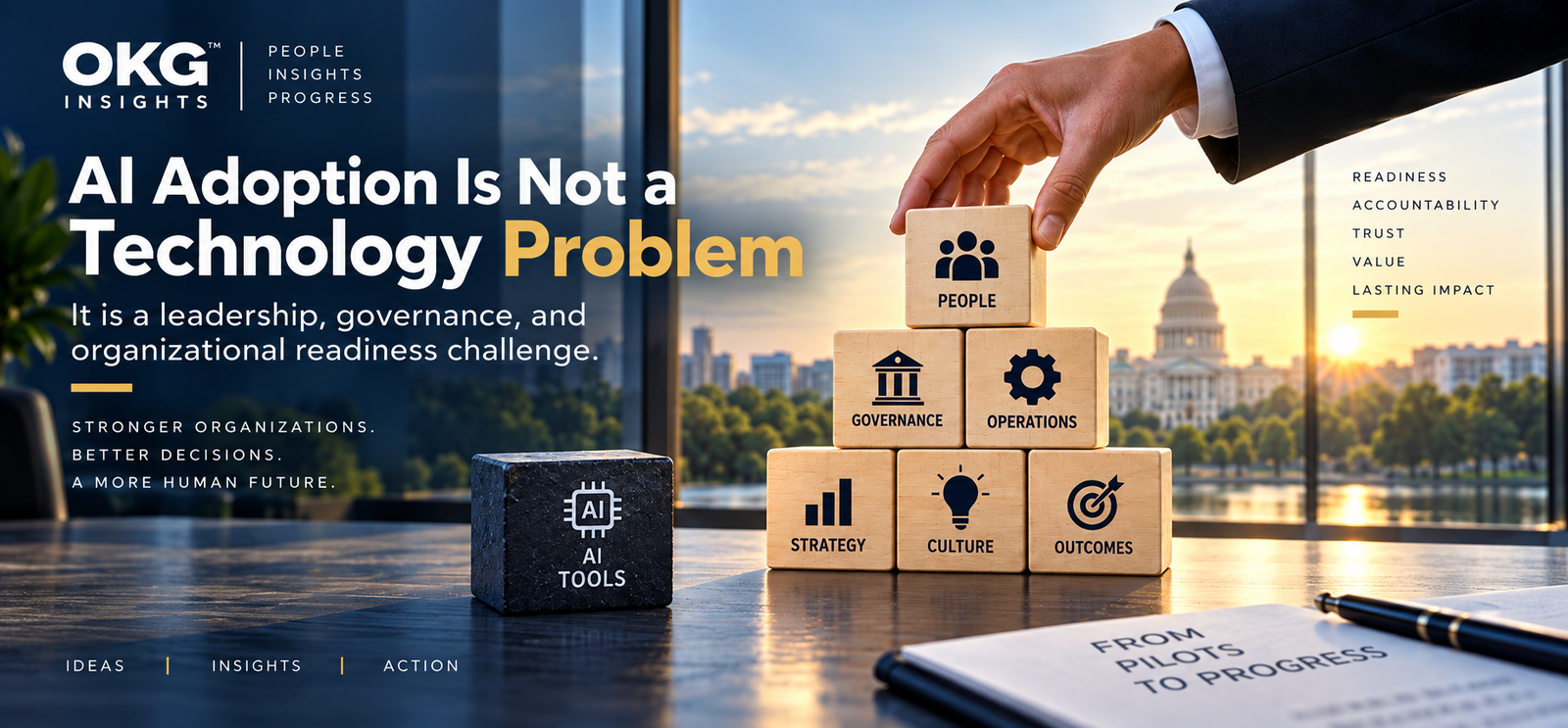

AI isn’t just a technology decision—it’s an organizational readiness issue. Successful adoption depends on leadership, governance, processes, workforce capability, and a clear understanding of where AI can create real value.
Artificial intelligence is moving quickly from experimentation into real business operations, but many organizations are still struggling to turn AI interest into meaningful results. The challenge is often not the technology itself. In many cases, the real issue is whether the organization is ready to adopt, govern, and use AI effectively.
AI readiness requires more than purchasing new tools or launching pilot projects. It depends on leadership alignment, clear priorities, strong governance, reliable data, appropriate processes, workforce capability, and a shared understanding of where AI can create value. Without these foundations, organizations may introduce AI faster than they can manage it, leading to fragmented initiatives, unclear accountability, inconsistent outcomes, and unnecessary risk.
One of the most important readiness questions is whether leaders have identified the problems AI is expected to solve. Organizations often begin with the technology rather than the business need. A more effective approach starts by defining strategic priorities, operational challenges, decision-making needs, and measurable outcomes. AI should support organizational objectives rather than become an objective on its own.
Leadership readiness is equally important. Senior leaders need enough understanding of AI to make informed decisions about investment, governance, risk, workforce impact, and organizational change. This does not mean every executive needs to become a technical expert. It means leaders should understand what AI can realistically do, where its limitations exist, and what responsibilities remain with people.
Governance also plays a central role in readiness. As AI becomes more embedded in business processes, organizations need clear accountability for how systems are selected, implemented, monitored, and used. Questions about data quality, privacy, bias, transparency, security, and human oversight need to be addressed before AI becomes deeply integrated into critical workflows.
The workforce dimension is another major factor. Employees may need new skills, new ways of working, and clearer guidance on how AI should support their responsibilities. Organizations that treat AI only as a technology project may underestimate the importance of communication, training, role design, and change management.
AI readiness therefore should be viewed as an organizational capability. The strongest organizations will not necessarily be those that adopt AI first, but those that build the structures needed to use it responsibly and consistently. A thoughtful readiness assessment can help leaders identify gaps, prioritize investments, and create a more sustainable path toward AI adoption.
Ultimately, successful AI adoption depends on the ability to align technology with strategy, governance, operations, people, and decision-making. Organizations that build these foundations are better positioned to move beyond experimentation and create long-term value from AI.